
Germany is one of the easier countries in Europe to ride in as a visitor, and one of the more rule-bound. A bicycle is a vehicle under German traffic law, with most of the duties that implies, and the rules about where you may ride are more specific than in the United States, Canada or Australia. None of it is difficult. It simply helps to know it before the first junction rather than after.
This guide summarizes the rules that affect a touring cyclist, taken from the German road traffic regulations (the StVO), the vehicle equipment regulations (the StVZO) and the national cyclists' federation, the ADFC. It is a rider's summary and not legal advice. Laws and fines change, so check the official sources before you travel.
Helmets: Not Required by Law, Required on Our Tours
Germany has no general helmet law for cyclists. That applies to adults and to children alike. The only riders required to wear one are those on an S-pedelec, the fast class of e-bike that assists up to 45 km/h (28 mph), which German law treats as a motor vehicle.
Our own rule is stricter than the law. Every rider on a Best European Bike Tours trip signs a waiver agreeing to wear an ANSI or Snell approved helmet at all times when riding during the tour. A helmet is not supplied with a rental bike, so bring your own.
Cycle Paths: When You Must Use Them
This is the rule that catches visitors out. In Germany you are obliged to use a cycle path only where it is marked with one of three round blue signs: a white bicycle on its own (a cycle path), a bicycle and pedestrians above and below a horizontal line (a shared path), or a bicycle and pedestrians side by side with a vertical line (a divided path). Where one of those signs stands, the regulation says cyclists may not use the roadway and must use the path.
Where there is a path on the right-hand side without a blue sign, you may use it but do not have to. A path on the left-hand side of the road may be used only where a sign specifically opens it to cyclists. The practical habit is to glance at the sign at the start of each path. If it is blue and round, you belong on the path.
Sidewalks are different. A sidewalk is for pedestrians, and adults may not ride on it. Children are the exception: up to their eighth birthday they must ride on the sidewalk, or on a cycle path that is physically separated from the roadway, and up to their tenth they may use the sidewalk.
Riding Two Abreast
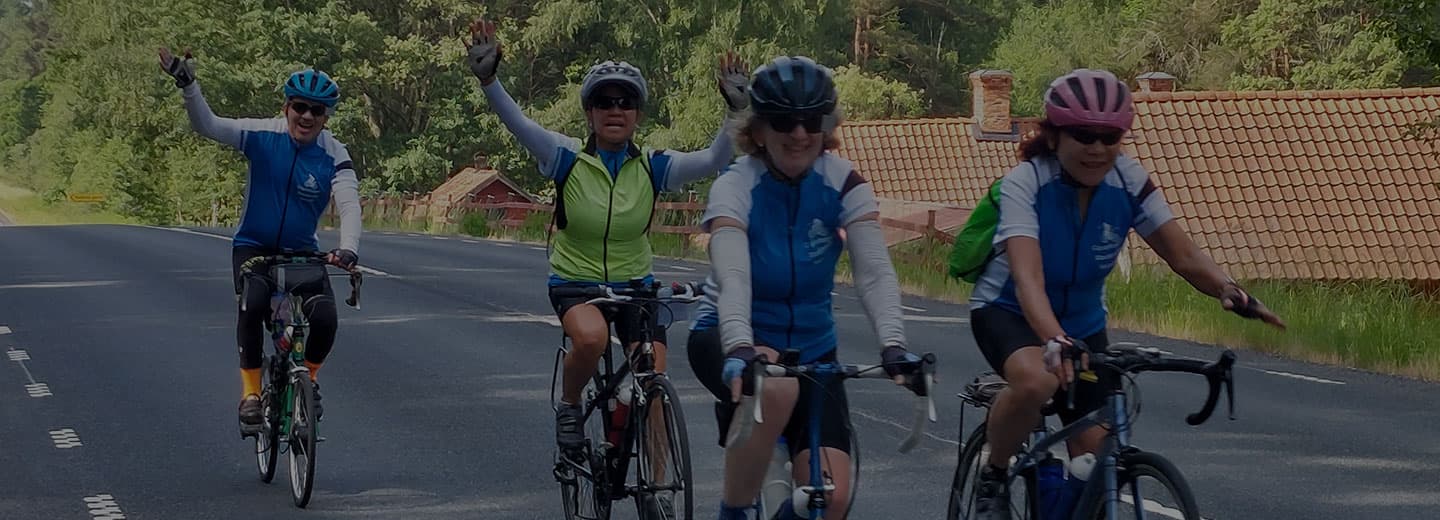
Riding side by side is legal in Germany as long as it does not hinder other traffic. If it does, the regulation requires single file. On a quiet lane with a clear view that means two abreast is fine. On a road where cars are waiting behind you, it means singling out and letting them through.
There is one kind of street where the question does not arise. On a signed bicycle street, a Fahrradstrasse, the rules state that riding side by side is permitted and that cycle traffic may be neither endangered nor hindered. You will meet these in cities and on the way out of them.
How Much Room Drivers Must Give You
German law puts a number on passing distance. A motor vehicle overtaking a cyclist must leave a lateral gap of at least 1.5 m (about 5 ft) inside built-up areas and at least 2 m (about 6.5 ft) outside them. The same figures apply when overtaking pedestrians and e-scooter riders.
Two other rules work in a cyclist's favor at junctions. A driver turning must let cyclists pass who are riding in the same direction on or beside the roadway. And in built-up areas, the driver of a vehicle over 3.5 tonnes must turn right at walking speed where cyclists or pedestrians have to be expected. Neither rule is a reason to ride up the inside of a truck at a junction. A driver who cannot see you cannot yield to you, and holding back behind a large vehicle is always the better choice.
For context on what is around you: the general speed limit for motor vehicles is 50 km/h (31 mph) inside built-up areas and 100 km/h (62 mph) for cars on ordinary roads outside them, unless signs say otherwise.
Lights, Reflectors and a Bell
The equipment rules are more detailed than most visitors expect. A bicycle in Germany must have a white front light and at least one red rear light. Battery and rechargeable lights are allowed, and they may be removable, but they must be fitted at dusk, in darkness, or whenever visibility calls for them.
The same regulation requires reflectors: a white one facing forward, a red one facing back, yellow ones on the pedals, and either reflective strips or spoke reflectors on the wheels. A bicycle must also carry a bell with a clear tone.
A tour riding in daylight will rarely need lights, but long summer evenings and the occasional underpass or heavy shower make a small set worth packing. If you are bringing your own road bike, check before you fly that it has a bell and reflectors, since road bikes are often ridden without either.
Alcohol Limits for Cyclists
Cycling under the influence is a criminal matter in Germany, not a formality. According to the ADFC, a cyclist with a blood alcohol level of 1.6 per mille (0.16 percent) or more commits a criminal offense even without any sign of unsafe riding. From as little as 0.3 per mille (0.03 percent), a rider can be liable to prosecution if there is an accident or the riding is visibly erratic.
The sensible reading for a touring rider is simple. Germany's beer gardens are part of the pleasure of riding there, and they are best enjoyed after the bikes are locked away for the night. A beer at lunch followed by an accident in the afternoon is a legal problem as well as a medical one.
Phones and Headphones
The phone rule applies to anyone in charge of a vehicle, and a bicycle counts. You may use an electronic device only if you do not pick it up or hold it, and then only by voice control or with a brief glance suited to the conditions. A phone in a handlebar mount used for navigation is within the rule. A phone in your hand is not, and the ADFC puts the fine for a cyclist at 55 euros.
Headphones are not banned outright. The ADFC's summary is that they are forbidden only when they substantially impair your hearing. On unfamiliar roads, in a group, with a guide calling out turns, our advice is to leave them in the bag.
E-Bikes Under German Law
A pedal-assist bike whose motor is rated at no more than 250 watts and cuts out at 25 km/h (15.5 mph) is treated as a bicycle in Germany. The rules for bicycles, including the ones in this article, apply to it in the same way. The faster S-pedelec class is a motor vehicle, and its rider needs an insurance plate, a driving license and a helmet.
What the Riding Is Actually Like
Rules are half the picture. The other half is the surface under your wheels and the traffic beside you, and here we can only speak for the routes we ride. Our German itineraries are built on small, quiet roads with as little car traffic as possible, and on bike paths. On Berlin to Copenhagen, most of the roads and paths are paved, with the exception of a few sections. On Berlin to Krakow, everything is paved apart from a few short sections of firmly packed dirt. On Munich to Prague via Salzburg, surfaces are mostly good or very good, with small sections that are less well maintained, and we suggest 23 to 28 mm tires.
City riding needs more attention than the countryside. Where a city has trams, the rails are the one piece of infrastructure that punishes inattention: cross them as close to a right angle as you can, and never ride along the groove. In town centers, expect cobbles, pedestrians stepping into cycle lanes, and other cyclists who are faster and more decisive than you are. Hold your line, signal with your arm, and do not stop suddenly on a cycle path.
In an Emergency
The number to remember is 112. It is the European emergency number, it is free from any fixed or mobile phone, and it works throughout the European Union, so the same number serves you in Germany, Denmark, the Czech Republic, Austria and Poland. It connects you to the emergency services: police, ambulance and fire brigade.
If you call, say where you are first. On a tour, the day's itinerary is the quickest way to work out a location, and emergency phone numbers for the trip are part of what every tour includes.
What Our Support Van Changes
Most of what makes cycling abroad stressful is not the law. It is being tired, lost or stuck with a mechanical problem in a place where you do not speak the language. A supported tour removes those three in turn.
- A tour guide and ride leader are on the route with you, so the question of which path is mandatory and which junction is next is answered by someone who has ridden it.
- The van carries tools and spares, and mechanical support is included, so a puncture or a slipping gear does not leave you at the roadside.
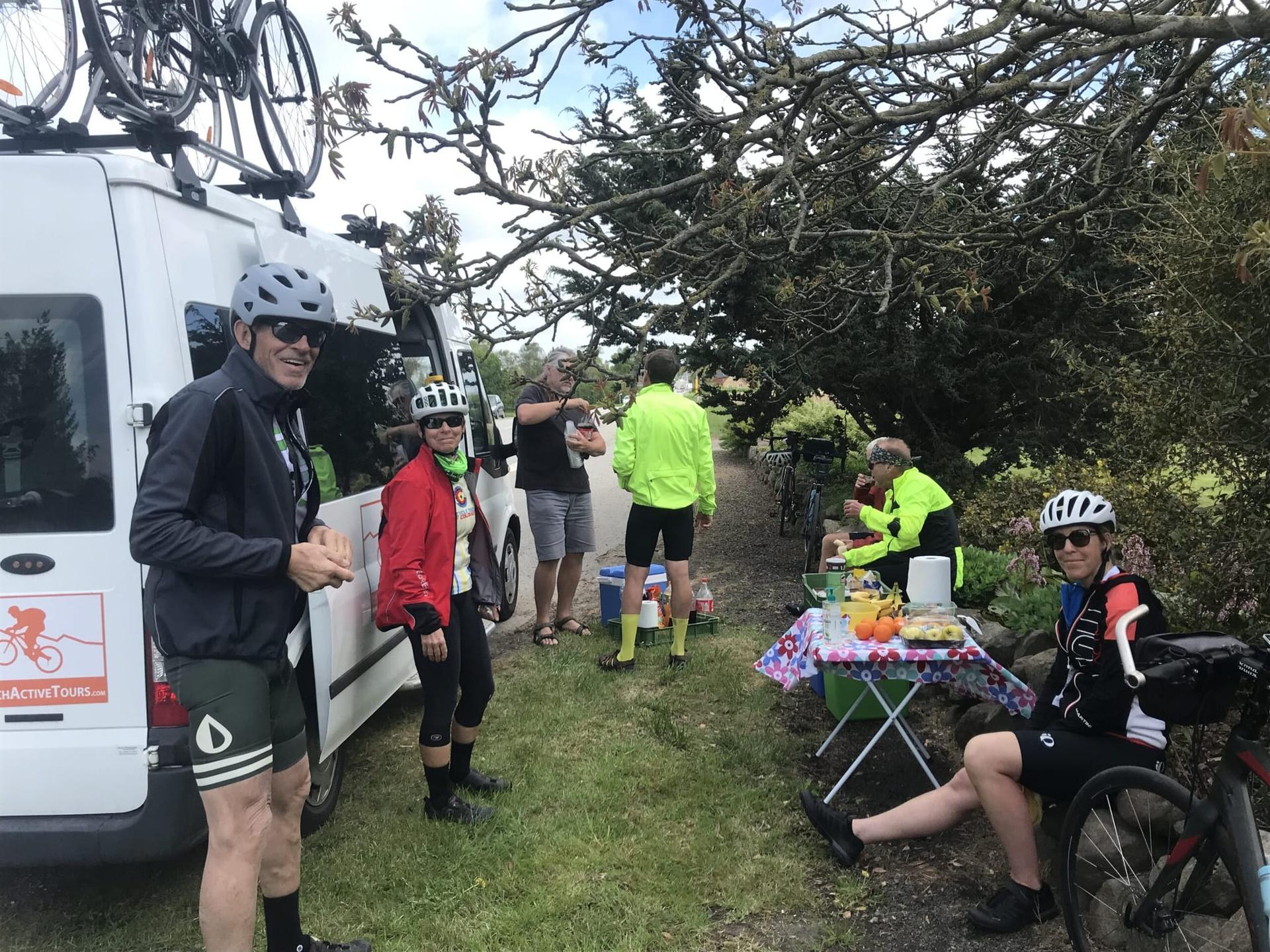
- The van stops along the route with water and snacks, which keeps a long day from turning into a hungry and careless one.
- You can take a lift for part of a day or all of it. A rider who is tired makes worse decisions in traffic than one who took the van for the last hour.
- Your luggage travels between hotels, so you ride a light bike that handles and brakes the way it should.
A Short Checklist Before You Ride
- Helmet packed. Not a legal requirement in Germany, but required on our tours and not supplied with rental bikes.
- Bell, reflectors, and a small front and rear light on your own bike.
- Blue round sign means use the cycle path. No sign means it is your choice.
- Two abreast only where you are not holding anyone up.
- Phone in a mount, not in your hand.
- Alcohol after the ride, not during it.
- 112 for any emergency.
This article is a summary for visiting riders and reflects the rules as we found them in the official texts in October 2026. It is not legal advice, and the regulations themselves are the authority. Check the current rules before you travel.
See All Guided Tours