
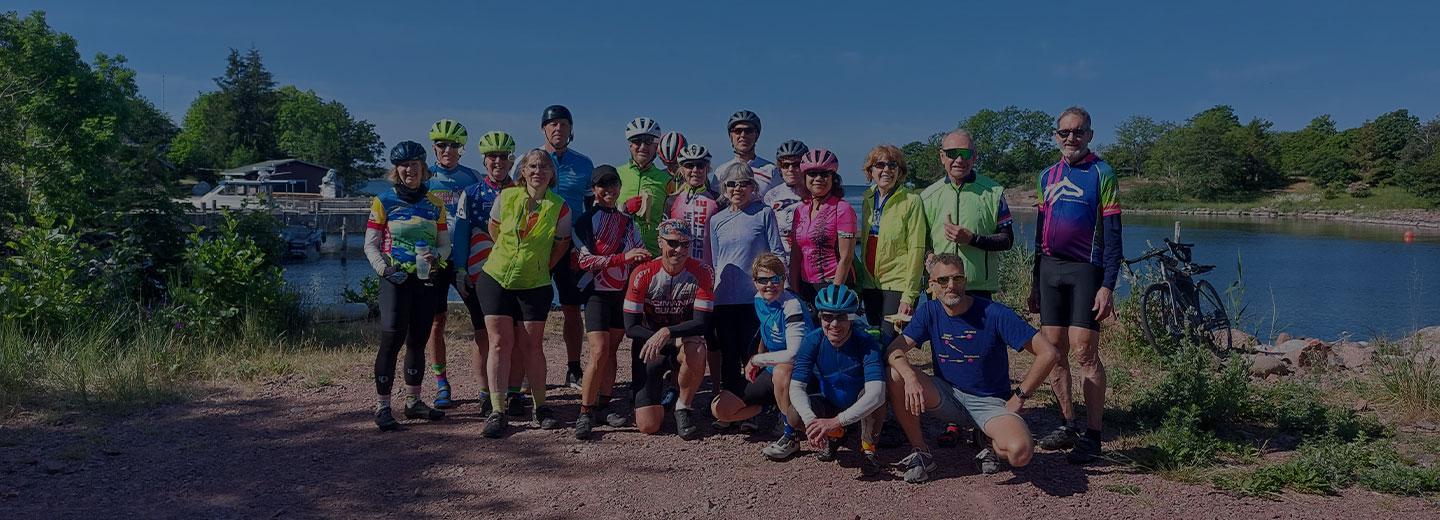
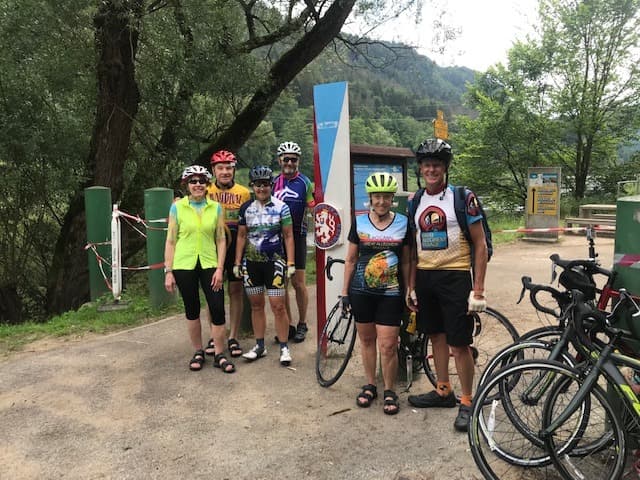
In most countries the argument for a guided cycling tour starts with the difficulty of doing it alone: the traffic, the missing signs, the language. Denmark removes most of that argument. It is one of the easiest countries in Europe to ride across on your own, and a company that told you otherwise would be selling you something.
So this comparison begins by granting what Denmark makes easy, and then looks at where the two ways of traveling really differ here: navigation, luggage, ferries, trains, the rules of the road, and what happens on a bad day. It ends with a plain account of who each option suits. Our own tours are guided and supported, so read it knowing which side of the comparison we stand on.
What Denmark Makes Easy for an Independent Rider
- A signed network. The Danish Road Directorate lists 11 national cycle routes totaling 4,787 km (about 2,975 miles), and VisitDenmark counts more than 11,000 km (about 6,800 miles) of signposted routes when regional and local routes are added.
- Mostly paved riding. Across the national routes, 83 percent of the distance is asphalt and 17 percent soil or gravel.
- Language. VisitDenmark says Danes tend to have a very good level of English and that it is easy to get around without speaking Danish.
- Ferries and trains that expect bicycles. More on both below.
- Clear rules. A cyclist has a defined place on the road, and other road users know what it is.
If you have toured independently before, can fix your own bike, and want to set your own pace, Denmark is a good place to do it. The rest of this article is about the points where that still takes work.
Navigation: Signs Versus a Planned Line
A national route in Denmark is marked with a white number in a red square and a bicycle symbol on a blue sign. Follow the number and you will reach the end of the route. Danish Cycling Tourism runs a national route planner with downloadable tracks, so an independent rider can carry the whole route on a phone or a GPS unit.
The catch is that a signed route goes where the route goes. The Road Directorate describes the national routes as intended primarily for cycle tourists, and they are drawn to show you coast and countryside, not to connect your hotel to the next one by the most sensible road. The moment you leave the signed line, to reach a booked room or to shorten a day, you are choosing roads from a map with no way of knowing which are pleasant and which carry trucks.
On our tours the line is planned in advance and ridden with a ride leader. You receive GPS files and cue sheets for each day, and the route is designed along small, quiet roads with as little car traffic as possible and along bike paths. Our Danish days are not planned around route signs. They run from the ferry at Rodby to Naestved and from Naestved to Copenhagen, on a line chosen for the riding.
Luggage: The Difference You Feel Every Hour
An independent rider in Denmark carries everything. That means a touring or hybrid bike with a rack, two panniers, and a load that you notice every time the road tilts and every time the wind is against you. It also changes the bike you can ride: a light road bike and loaded panniers do not go together.
On a supported tour the luggage travels in the van from hotel to hotel. You ride with what you need for the day. This is the single biggest practical difference between the two ways of traveling, in any country, and Denmark's wind makes it larger. The Danish Meteorological Institute records that the most frequent wind direction is from around the west, and a set of panniers into a headwind across open farmland is hard work.
Distance: What Kind of Days You Want
The two approaches tend to produce different days. Our Danish days are long: 98 km (61 miles) from Puttgarden to Naestved, with the ferry crossing in the morning, and 84 km (52 miles) from Naestved to Copenhagen on the Berlin to Copenhagen tour, and 110 km (68 miles) from Copenhagen to Bastad in Sweden on the Copenhagen to Helsinki tour. Both tours are graded moderate.
Those distances are comfortable on an unloaded bike with snack stops and a van behind you. With full panniers they would be hard days for many riders, and an independent rider would sensibly plan shorter ones and take more of them. Neither is better. One covers ground and arrives in a capital city in two days. The other spends a week in the same landscape. Decide which trip you want before you decide how to book it.
Ferries: Simple Either Way, With One Thing to Plan
Two ferry crossings bracket the Danish riding on our tours, and both are straightforward for a cyclist traveling alone.
- Puttgarden to Rødby. Scandlines gives the crossing as approximately 20 km (about 12 miles) and 45 minutes. Cyclists buy a pedestrian ticket with a bicycle add-on, and Scandlines asks you to check in at the harbor at least 15 minutes before departure.
- Helsingør to Helsingborg. Øresundslinjen gives the crossing time as 20 minutes. A bicycle is included at no extra cost with a passenger ticket, and staff direct cyclists on board and show them where to leave the bike.
What takes planning is the day around the ferry, not the ferry. On our Berlin to Copenhagen tour, Day 8 starts with a short ride to the port at Puttgarden, crosses to Rodby, and then has most of its 98 km still to ride on the Danish side. On your own, a missed sailing in the morning comes straight out of your afternoon. With a group, the timing is someone else's job.
One longer-term note for independent planners: Femern A/S is building a tunnel of about 18 km (about 11 miles) between Lolland and Fehmarn to carry a railway and a motorway. It is under construction as we write, and the ferry is the way across with a bike. Check the operators' own sites for current timetables and ticket rules before you go.
Trains: A Useful Safety Net if You Know the Rules
Denmark is a good country for putting a bike on a train, which gives an independent rider a way to skip a wet day or a dull stretch. The rules differ by type of train, according to DSB, the Danish state railway.
- S-trains, the suburban network around Copenhagen: taking a bike is always free.
- InterCity trains: you need a bicycle space ticket for the bike.
- Regional trains: bikes travel freely outside rush hours. In the weekday rush hours, which DSB gives as 6:00 to 8:59 and 15:00 to 17:59, a bicycle space ticket is required.
- Copenhagen Metro: VisitDenmark says bikes are not allowed in commuter hours, Monday to Friday from 7:00 to 9:00 and from 15:30 to 17:30.
These rules change, so read DSB's current page before relying on them. On a guided tour the equivalent safety net is the van. You can ride in it for part of a day or all of it, with no ticket and no timetable.
The Rules of the Road Apply to Both
Guided or not, you ride under Danish traffic law, and it is stricter with cyclists than many visitors expect. You must use the cycle path where there is one. Left turns at junctions are made in two stages. You signal with your arm before turning and raise a hand before stopping. A handheld phone is forbidden. The bike must carry a bell and reflectors, and lights after dark. There is no helmet law, though the Danish Road Safety Council recommends wearing one, and on our tours a helmet is required.
An independent rider has to learn all of this before the first junction. A rider in a group has a ride leader to follow through the first few, which is a kinder way to learn the two-stage left turn in Copenhagen traffic. Either way, read the rules before you travel. Our article on Danish cycling rules sets them out with their sources, and the official bodies are the place to check for changes.
When Something Goes Wrong
This is where the two options are furthest apart. On your own, a broken spoke, a torn tire or a bad stomach is yours to solve, in a small town, possibly on a Sunday.
On a supported tour the van carries tools and spares, mechanical support is included, and the tour has emergency phone numbers. A mechanical problem costs you a few minutes or, at worst, a ride in the van to the hotel. If you are unwell or simply do not feel like riding, the van is there for that too. For emergencies of the serious kind, the number in Denmark is 112 whichever way you travel, and travel insurance is your own responsibility in both cases.
Who Self-Guided Denmark Suits
- Riders who have toured independently before and like the planning as much as the riding.
- Riders who want short days, long stops and no fixed schedule.
- Riders who want to see more of Denmark than one corner of it: the islands of Route 8, the west coast, the interior of Jutland.
- Riders comfortable carrying their own luggage and fixing their own bike.
- Riders for whom the lowest total cost matters more than convenience.
Who a Guided Tour Suits
- Riders who want Denmark as part of a longer journey, arriving in Copenhagen from Berlin or leaving it for Stockholm and Helsinki.
- Riders who want to ride a light bike with no luggage, at a road rider's distances.
- Riders traveling alone who would like company on the road and at dinner.
- Couples or friends who ride at different strengths. The van lets one person ride the whole day and the other ride half of it.
- Riders with limited vacation who would sooner spend their evenings in the town than booking tomorrow's room.
- First-time visitors who would like someone else to have thought about the ferry, the route into Copenhagen and the dinner.
If you read the first list and recognized yourself, go and ride Denmark on your own. It is a fine country for it, and the national route numbers will get you started. If the second list is closer, our two tours that ride here are on request, with the current prices and dates on their tour pages, and we are glad to talk through which one fits.
See Our Guided Tours