
We run guided, supported tours, so you would expect us to say that guided is better. It is not that simple, and we would rather you chose the right kind of trip than the one we happen to sell. Poland can be ridden independently. It has signed long-distance routes and a rail operator that carries bicycles.
What Poland also has, in the south where our Berlin to Krakow tour rides, is hills, a language most visitors cannot read, and a few traffic rules that differ from home. This article goes through the practical differences one at a time, says plainly where each option is stronger, and ends with who each one suits.
What the Two Terms Mean
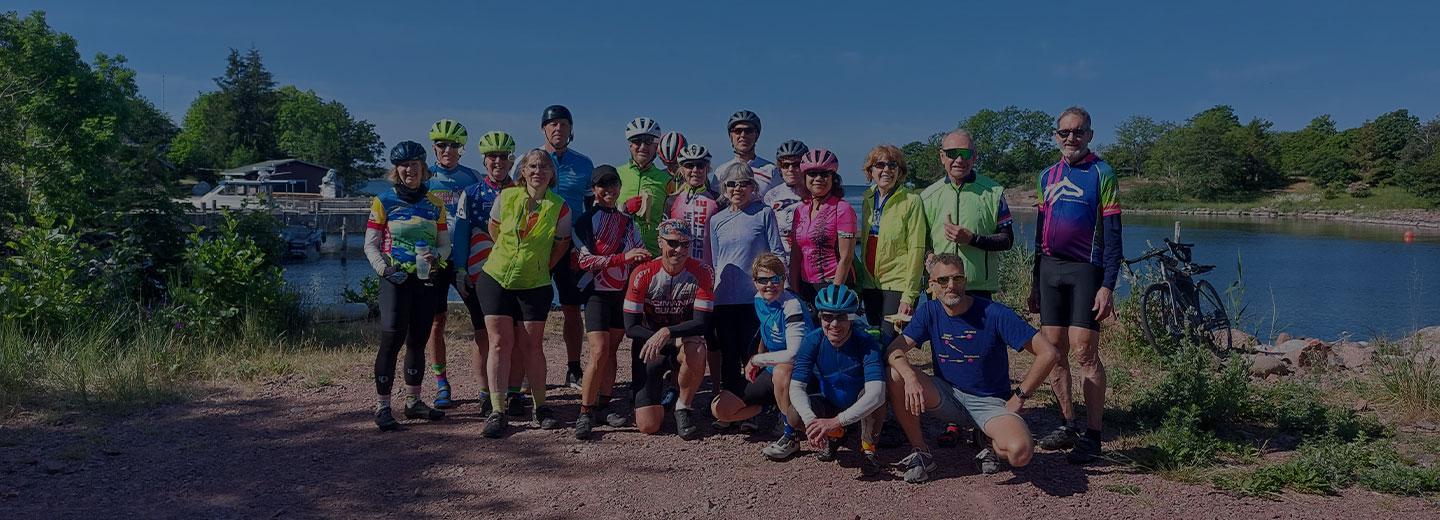
A guided tour, as we run it, means a tour guide and ride leader on the route, a support van that follows the group with water, snacks, tools and spares, luggage carried from hotel to hotel, and hotels, breakfasts, a set number of dinners and the sightseeing arranged for you. You ride your own pace within the group, with GPS files and cue sheets as well as a leader.
Self-guided covers a wide range. At one end you buy a package from an operator who books the hotels, moves the bags and hands you a route, and then you ride alone. At the other end you plan everything yourself. What the two have in common is that nobody is on the road with you. When something goes wrong at kilometer 50, it is yours to solve.
Navigation
Poland's named routes make independent navigation possible. Six EuroVelo routes cross the country, and regions such as Malopolska, around Krakow, sign and promote their own trails. But a name is not a guarantee of a finished path. The regional tourism portal for the Vistula Cycling Trail says that some sections are still incomplete and need detours, and its description of VeloDunajec warns of unpaved stretches and several short, steep climbs.
Our route between Cieszyn and Krakow is not one signed trail. It is a line we have put together from small, quiet roads and bike paths, chosen to keep car traffic low and to pass the things worth seeing. On a guided tour that choice has been made and checked. Riding independently, you would be making it yourself from maps, and finding out on the day which lane turns to dirt.
There is a legal side to navigation as well. Polish law obliges a cyclist to use a cycle path, shared path or cycle lane where one is marked for the direction of travel. A rider following a GPS line down the road needs to notice when a compulsory path begins alongside it. A ride leader notices for you.
Luggage and the Hills
This is the difference you feel in your legs. Our itinerary calls the day from Cieszyn to Zywiec, 69 km (43 miles) through the Beskid hills, a hilly day, and the tour's difficulty note says most of the hilly terrain falls in the last four days of the trip. Poland is in those four days.
With a van carrying the bags, you climb and descend on an unloaded bike. Without one, you either carry panniers over the hills or pay a luggage transfer service, where one operates on your route. Loaded descending is a skill of its own: the bike is heavier, it takes longer to stop, and it handles differently in a bend. If you have toured with panniers before, this will not worry you. If you have not, a hilly region is a hard place to learn.
Transfers and Trains
Our route uses bus transfers in two places: from Decin to Olomouc on the sixth day, and a shuttle to the abbey at Tyniec on the last day before the short ride along the Vistula into Krakow. Both are included in the tour. They are what allow an eleven-day trip to take in Berlin, Dresden, Moravia and Krakow.
An independent rider would cover those gaps by rail or by riding them. Trains are workable in Poland. The long-distance operator, PKP Intercity, sells a separate bicycle ticket, listed in 2026 at a flat 11.90 zloty whatever the distance. The conditions are the part to read: bicycles travel only on trains that have designated spaces for them, in second class, and buying the bike ticket on board adds a fee. The spaces are designated ones, so you plan the day around the train rather than the other way round.
Language and Local Knowledge
Polish is not a language most English speakers can guess at, and in the small towns and villages between Cieszyn and Krakow you may not find English spoken at a village shop or a rural guesthouse. Menus, road signs with extra text, a notice on a closed path: these are small frictions, and they add up over a day.
Our tours have a bilingual tour guide and ride leader. That matters for more than ordering lunch. It means someone can explain what you are looking at, whether that is the timber architecture of the villages on the last riding day or the history of a border town divided between two countries. It also matters a great deal if you need a pharmacy, a bike shop or a doctor.
There is a practical local point too. Poland restricts shop trading on Sundays and public holidays, with exceptions such as gas stations, pharmacies, bakeries and restaurants. A guide plans around that. An independent rider needs to know it before arriving in a small town on a Sunday expecting to buy supplies.
Road Rules You Carry Alone
On a self-guided trip you are your own safety briefing. The Polish rules most likely to catch a visitor out are these.
- Cycle paths and lanes are compulsory where they are marked for your direction.
- Riding side by side on the roadway is allowed only exceptionally, when it does not hinder other road users.
- A bicycle must have a front light, a rear light, a rear reflector, a working brake and a bell.
- Riding with 0.2 to 0.5 per mille of alcohol carries a 1,000 zloty fine, and above 0.5 per mille a 2,500 zloty fine, according to Polish police guidance.
- Since June 3, 2026, riders under 16 must wear a helmet.
None of these is hard to follow once you know it. Rules change, so check the official sources before you travel. On our tours every rider agrees in the waiver to wear a helmet at all times when riding, whatever the local law says.
When Something Goes Wrong
A puncture is an inconvenience on any trip. A broken spoke, a snapped derailleur hanger or a fall is where the two kinds of trip part company. On a guided tour mechanical support is included, the van carries tools and spares, and there is a vehicle to take you and the bike to the hotel. Riding alone, you are looking for a bike shop in a region you do not know, in a language you may not speak.
The emergency number is the same either way: 112 works throughout the European Union, free of charge, from any phone. A guide can make that call in Polish and tell the operator exactly where you are.
The van also covers the ordinary bad day. Each tour has a set difficulty, but you can ride as much as you want and take the van for part of a day or all of it. A self-guided rider who wakes up with sore knees on the hilly day has to ride it anyway or work out a train.
Cost and Freedom
A self-guided trip can cost less, and it would be dishonest to pretend otherwise. You are not paying for a guide, a driver or a vehicle. You also choose your own dates, your own daily distances and your own company, and you can stay an extra day in a town you like without asking anyone.
What a guided price buys is the removal of work and risk: the route research, the hotel bookings, the transfers, the luggage, the dinners already chosen, the sightseeing already booked, and someone to call. On the Berlin to Krakow tour that includes 10 nights in 3- and 4-star hotels and pensions, breakfasts and 6 dinners, and guided visits in Berlin, Dresden and Krakow. Whether that is worth the difference depends on how much you enjoy planning and how much your time is worth to you.
Who Each Option Suits
Self-guided suits you if you have toured independently before, can fix the common mechanical problems yourself, are comfortable riding a loaded bike on hills or have a flat route in mind, and like the planning as part of the trip. Northern and central Poland, where EuroVelo describes its Baltic to Adriatic route as one of the flattest parts of that route, is the easier place to start.
Guided suits you if this is your first multi-day tour or your first in this part of Europe, if you are riding with a partner or friends of different strengths, if you want the hilly south without carrying your bags over it, or if you simply want to ride and have everything else handled. It also suits a non-riding partner. On our tours you can come along without getting on the bike at all.
There is a third route for groups. Any of our tours can be run on different dates as a custom tour for a group of cyclists, with the itinerary, duration and activities adjusted to what the group wants. If you have a group of friends and your own dates in mind, ask us.
The current price and dates for the scheduled tour are on the tour page. If you are not sure which kind of rider you are, tell us what your riding week looks like at home and we will give you a straight answer.
See the Berlin to Krakow Tour