
Cycling in Spain
A Rider’s Guide to Spain
Spain is large enough to hold several different cycling countries. The north coast is green and mild. The center is a high plateau. The south is hot, dry and mountainous, with the highest peak in the Iberian Peninsula above Granada. A rider choosing where and when to go needs to know which Spain they are picking.
We ride the south. Our Spanish tour crosses Andalucía from Seville to Granada by way of Córdoba, Jaén, Baeza and Guadix, and it is graded Demanding. Our other articles on Andalucía cover the region's food, festivals, packing and accommodation in detail. This page covers the country: the national route networks, how the season differs from region to region, and the traffic rules for cyclists, which were revised in 2026.
If you are close to booking, the last section and the questions at the foot of the page say what a week on our tour involves.
Spain at a Glance
- Our tours here
- Andalucía, Spain Cycling Tour
- Best months to ride
- In the south, spring and autumn; in Seville the average daily high is 26 °C (79 °F) in October and 36 °C (97 °F) in July
- Terrain on our route
- Moderately hilly to hilly, with a high point of 1,297 m (4,255 ft) on the last riding day
- Currency
- Euro
- Helmet law
- Compulsory for all cyclists on roads outside towns; compulsory everywhere for riders under 16
- Riding two abreast
- Allowed on the shoulder; single file where visibility is poor, when holding up traffic, and at night
- Emergency number
- 112
Our Guided Tour in Spain
One of our tours rides Spain. Dates, price and difficulty below come straight from the tour page.
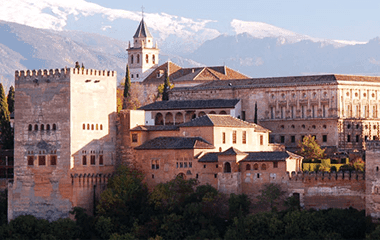
Andalucía, Spain Cycling Tour
September 28 – October 7, 2027
Days 1–10: Seville, Constantina, Cordoba, Baena, Jaén, Baeza, Guadix, Granada
A one-way crossing of Andalucía from Seville to Granada through the Sierra Norte, the Guadalquivir valley, the olive country of Jaén and the foothills of the Sierra Nevada.
- Length
- 10 Days
- Difficulty
- Demanding
- Price
- $3,990 USD or $5,660 AUD
Where the Riding Is
Three EuroVelo routes cross Spain. EuroVelo 1, the Atlantic Coast Route, runs through the interior of the peninsula from north to south along historic roads such as the Way of Saint James and the Vía de la Plata. EuroVelo 3, the Pilgrims Route, largely follows the French Way through Navarre, La Rioja, Castile and León and Galicia. EuroVelo 8, the Mediterranean Route, passes through Barcelona, Valencia, Málaga and Cádiz.
The network Spain is best known for is its own. The Vías Verdes are disused railway lines converted into paths for cyclists and walkers, a program under way since 1993 and promoted by the Spanish Railways Foundation. The foundation counts 3,600 km (about 2,240 miles) of greenways in 143 itineraries, and the national tourism board notes that they are found practically everywhere in the country except the Canary Islands. No motor vehicles are allowed on them.
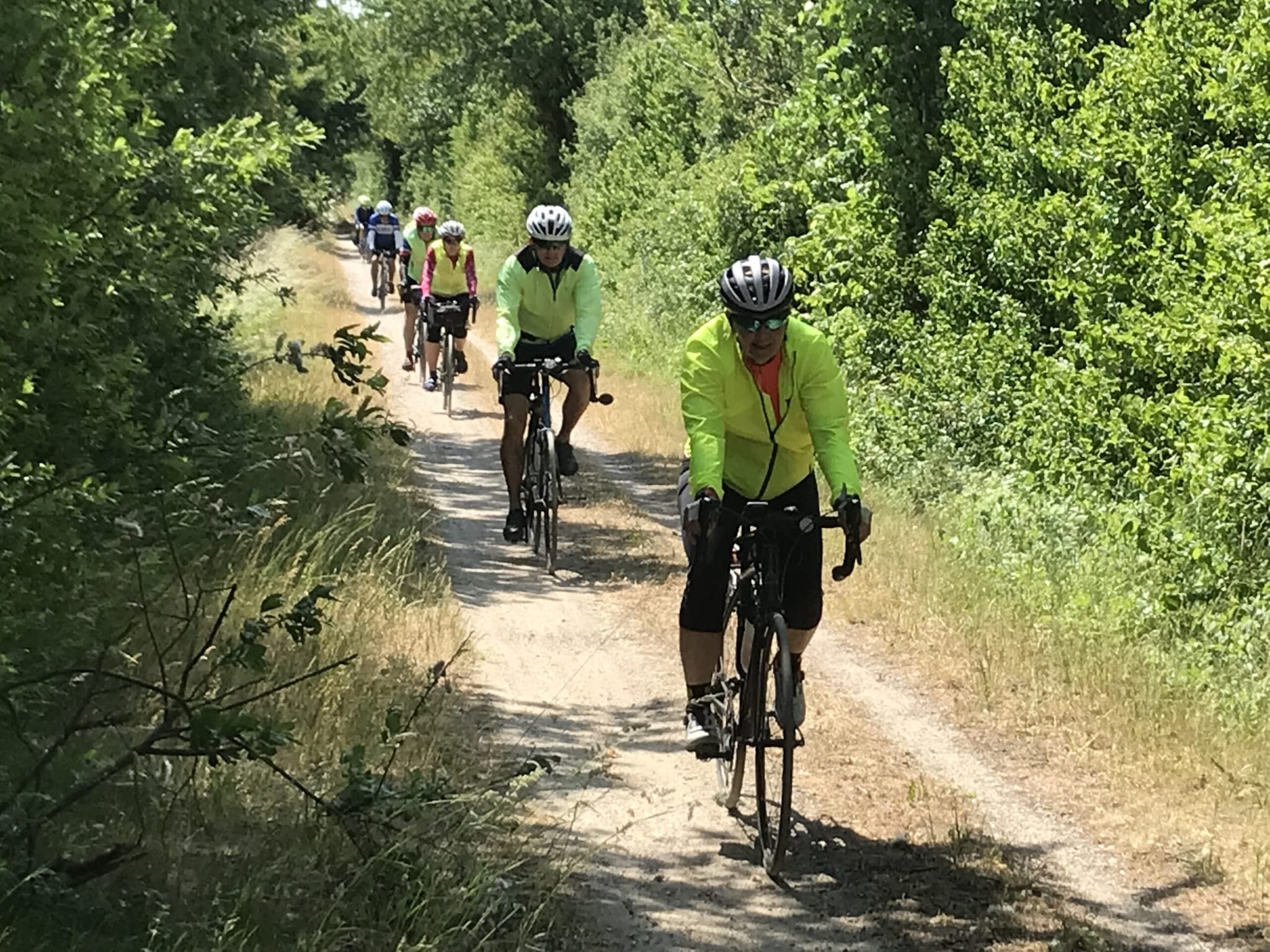
Our tour rides one of them. The Vía Verde del Aceite, the olive oil greenway, runs 127 km (79 miles) between Jaén and Puente Genil and is the longest greenway in Andalucía, with 13 metal viaducts and four tunnels. Its surface is asphalt and compacted earth. We join it on the day from Baena to Jaén and follow it into the city.
When to Go
Season depends on latitude and altitude. Figures from AEMET, the state meteorological agency, for 1981 to 2010 show how far apart the regions are. In July the average daily high is 36.0 °C (96.8 °F) at Seville airport and 36.9 °C (98.4 °F) at Córdoba airport, against 32.1 °C (89.8 °F) at Madrid Retiro and 23.6 °C (74.5 °F) at Santander airport on the north coast. The north is a summer destination. The south in summer is too hot for all-day riding.
Andalucía's riding seasons are spring and autumn. In May the average high is 27.2 °C (81.0 °F) in Seville. In October it is 26.0 °C (78.8 °F) in Seville, 25.1 °C (77.2 °F) in Córdoba and 23.2 °C (73.8 °F) at Granada airport, which stands at 560 m. Nights in Granada are cool by then, with an average low of 8.7 °C (47.7 °F). October also brings the first real rain, averaging 68 mm in Seville and 86 mm in Córdoba.
Roads, Rules and Cycle Paths
Spain's traffic regulations were amended by Royal Decree 518/2026, which took effect on 1 October 2026, so older guides are out of date. Cyclists must wear an approved or certified helmet, properly fastened, on all interurban roads, and riders under 16 must wear one on every kind of road. The earlier exemptions have been removed.
Cyclists may ride two abreast on the shoulder, or on the necessary part of the carriageway where there is no usable shoulder. They must move into single file on stretches without visibility, when they are holding up traffic, between sunset and sunrise, and in poor visibility. A driver overtaking cyclists must leave at least 1.5 m (about 5 feet), must change lane completely on roads with more than one lane in each direction, and outside towns must slow to at least 20 km/h below the limit.
The everyday rules sit in the same regulations. Lights are required between sunset and sunrise and, at any hour, in tunnels and underpasses. On interurban roads at night or in poor visibility, a cyclist must also use at least one luminous or reflective element visible from 150 m. Mobile phones and headphones are prohibited while riding. The general alcohol limit of 0.5 grams per liter of blood applies to cyclists. Once the first rider of a group has entered a roundabout, the whole group has priority. Check the current rules with the traffic authority, the DGT, before you travel. This is a summary, not legal advice.
What Riding Here With Us Looks Like
The tour runs from Seville to Granada in ten days, with seven riding days and a day off in Córdoba. Stages range from 57 km (36 miles) to 125 km (78 miles), and five of the seven are 75 km or longer. The longest, Baeza to Guadix, comes with an open offer of a lift in the van. The difficulty note asks for an experienced rider who is comfortable with 80 to 100 km (50 to 65 miles) a day on moderately hilly to hilly terrain.
The route links three cities with World Heritage sites: Seville, Córdoba and Granada. The tour includes walking tours and sightseeing in Seville, a visit to the Mezquita in Córdoba, the Alhambra in Granada, and an olive oil museum or mill. It also includes nine nights of lodging, breakfast every morning and five dinners. A guide and ride leaders are on the route, and the van carries the luggage and stops with snacks.
Get to Know Spain
Where the riding is, when to go, and what you will eat and see on the way. These were written for our Andalucía route, which rides through Spain.
- RoutesTop Cycling Routes in Andalucía: From Coastal Trails to Mountain Passes
- Best time to goBest Time to Cycle in Andalucía: Weather, Festivals & Seasonal Tips
- Food & drinkLocal Food and Drink to Experience on Your Andalucía Bike Tour
- CultureCultural Highlights and Festivals to Discover While Biking Andalucía
Plan Your Spain Ride
What the trip costs and involves: where you stay, the bike, what to pack, the roads and the rules, and how fit you need to be. These were written for our Andalucía route, which rides through Spain.
- ItineraryHow to Plan an Andalucía Bike Tour: Itineraries for All Levels
- CostsBudgeting Your Andalucía Bike Tour: Costs and Money-Saving Tips
- Where to stayWhere to Stay on an Andalucía Cycling Tour: Bike-Friendly Accommodation
- Bike rentalBike Rentals and Guided Tours in Andalucía: Your Complete Guide
- Packing listEssential Gear and Packing List for Cycling in Andalucía
- SafetyCycling Safety and Road Conditions in Andalucía: What You Need to Know
Choose Your Tour and Book It
Once Spain is on your list, these are the pages that settle the rest: how a guided tour compares with going alone, what our price covers, how hard the riding is, and how to reserve a place.
What the price includes
Lodging, breakfasts, guides, van support and luggage transport, and where the list stops.
Difficulty levels
How we grade Easy, Moderate and Demanding, and how to tell which you are ready for.
Bike rentals
The bikes we rent, what comes fitted to them, and bringing your own instead.
How reservations work
Confirm there is space, complete one registration form per rider, then send your deposit.
Private departures
Any of our tours can run on other dates for your own group, with the itinerary tailored to it.
What riders say
Testimonials from riders who have been on tour with us.
Ready to ride Spain?
Register for a scheduled departure, or ask us about dates for your own group.

Stay Updated
Subscribe to be updated on our latest news.