
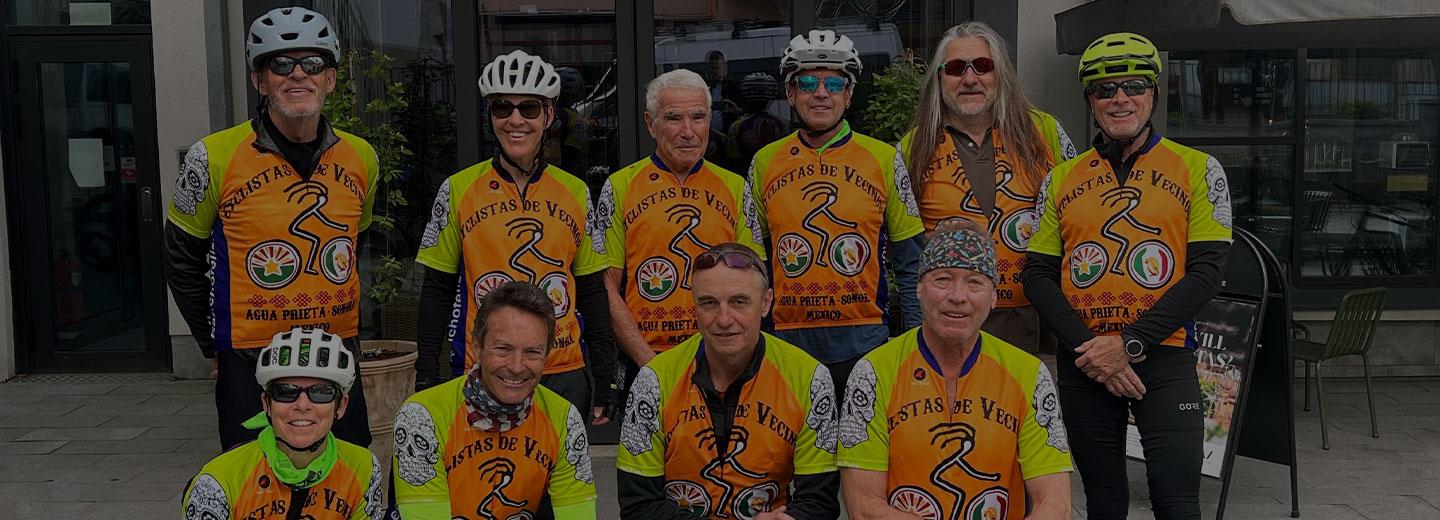
Cycling in Hungary
A Rider’s Guide to Hungary
Hungary is the last country on our Prague to Budapest tour and the first on our long ride from Budapest to Berlin. We arrive across the river, over the Maria Valeria bridge from Sturovo in Slovakia into Esztergom, the former royal seat, and then on to Budapest.
We should be clear about how much riding that is. On the Prague to Budapest tour the cycling in Hungary is the final stretch of Day Nine, over the bridge and into Esztergom. The next morning we transfer to Budapest by bus, and the afternoon is a boat tour of the city center. Hungary on this tour is two nights, one river crossing and a capital, not a week in the saddle.
Our route articles already cover the Prague to Budapest ride day by day. This page adds what belongs to Hungary itself: its currency, its own traffic rules, its season and the long-distance routes a rider could follow from here.
Hungary at a Glance
- Our tours here
- 2 guided tours
- Best months to ride
- May to September
- Terrain on our routes
- Flat riding beside the Danube into Esztergom
- Currency
- Hungarian forint (not the euro)
- Helmet law
- Tied to speed: outside built-up areas 50 km/h with a helmet, 40 km/h without; we require one for every rider
- Speed limit on cycle paths
- 30 km/h (20 km/h on shared paths)
- Emergency number
- 112
Our Guided Tours in Hungary
Two of our tours ride Hungary, each seeing a different part of it. Dates, prices and difficulty below come straight from each tour page.
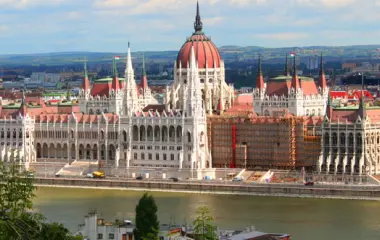
Prague to Budapest via Vienna and Bratislava Cycling Tour
August 17-27, 2027
Days 9–11: Esztergom, Budapest
Hungary is the finish: across the Danube into the former royal seat of Esztergom, then a transfer to Budapest for a boat tour and the farewell dinner.
- Length
- 11 Days
- Difficulty
- Moderate
- Price
- $3,850 USD or $5,470 AUD
Budapest – Vienna – Prague – Berlin Cycling Tour
Upon request, minimum of 8 participants
Itinerary on request
A long ride for groups that starts in Budapest and ends in Berlin, run on request.
- Length
- 23 Days
- Difficulty
- Moderate
- Price
- Please contact us for more information
Where the Riding Is
The Danube is the spine of cycling in Hungary. EuroVelo 6, the Atlantic to Black Sea route, runs about 4,700 km (2,900 miles) from Nantes to Constanta through ten countries, and EuroVelo describes its Hungarian section as following the river from Rajka to Mohacs. Among its attractions EuroVelo lists the fortresses of Komarom and Komarno, the landscape of the Danube Bend and the banks of the Danube in Budapest. It also notes ferries along the route at Szob and Vac, and that the Szob ferry does not operate from October 15 onwards.
Three more EuroVelo routes cross the country: EuroVelo 11, the East Europe Route, EuroVelo 13, the Iron Curtain Trail, and EuroVelo 14, Waters of Central Europe, which EuroVelo describes as a route linking rivers, lakes and spas across Austria and Hungary. EuroVelo adds that bicycles can be carried on almost all Hungarian trains for a small surcharge, on routes marked with a bicycle icon in the timetable, and that bicycle places are limited.
Our own crossing is at Esztergom. The Maria Valeria bridge was handed over in 1895, blown up in December 1944 and rededicated on October 11, 2001, according to the town's tourist office. Budapest, where the tour ends, has been on the World Heritage List since 1987 for its Danube banks and the Buda Castle Quarter, with Andrassy Avenue added in 2002.
When to Go
Hungary has warm summers. Its meteorological service, HungaroMet, says January is the coldest month and the end of July and beginning of August the warmest part of the year. The Budapest averages it supplies to the World Meteorological Organization are an older series, for 1981 to 2010, and give a mean daily maximum of 22.4°C (72°F) in May, 25.3°C (78°F) in June, 27.9°C (82°F) in July, 27.4°C (81°F) in August and 22.1°C (72°F) in September.
Rain is moderate through the season on those figures, from about 62 mm in May and 64 mm in June down to 45 mm in September. For riding, May, June and September are the comfortable months, and July and August call for an early start, sunscreen and plenty of water.
Roads, Rules and Cycle Paths
Hungary's highway code, known as KRESZ, has its own rules for cyclists. Where a cycle path or shared path has been marked alongside a road, two-wheeled bicycles must use it. Cyclists ride in single file on the roadway. A bicycle may go no faster than 40 km/h (about 25 mph) in built-up areas. Outside them the limit is 50 km/h (about 31 mph) for a rider wearing a helmet and carrying no passenger, and 40 km/h without a helmet. The limit is 30 km/h on a cycle path and 20 km/h on a shared pedestrian and cycle path.
At night and in poor visibility a bicycle needs a white front light, a red rear light and a reflector, and outside built-up areas the rider must also wear a reflective vest or clothing. Riding without holding the handlebars is prohibited, and so is using a hand-held mobile phone on a two-wheeled vehicle. Outside built-up areas a cyclist may not turn left from a main road: you dismount and walk the bike across.
On alcohol, KRESZ bars drivers from having any alcohol in their system, with an exception for cyclists who are in a fit state to ride safely. We would not test the edges of that. This is a summary for riders, not legal advice. It reflects the text of the code in force when we checked in October 2026, last amended in April 2026, and rules change, so check the official text before you travel.
What Riding Here With Us Looks Like
Day Nine of the Prague to Budapest tour is one of the longest of the trip, 100 km (63 miles) from Velky Meder to Esztergom, almost all of it on the Slovak side along quiet roads on the Danube's northern bank. The tour is graded Moderate, and its difficulty note says the route becomes flatter as it follows the Danube. You ride with a bilingual tour guide and ride leaders, and the van carries your luggage and stops with snacks along the way.
From Esztergom we transfer by bus to Budapest, where a boat tour and the farewell dinner close the trip. An extended stay in Budapest is an option on this tour. Remember that Hungary uses the forint, so the euros you carried through Austria and Slovakia will need changing or a card.
Get to Know Hungary
Where the riding is, when to go, and what you will eat and see on the way. These were written for our Prague to Budapest route, which rides through Hungary.
Plan Your Hungary Ride
What the trip costs and involves: where you stay, the bike, what to pack, the roads and the rules, and how fit you need to be. These were written for our Prague to Budapest route, which rides through Hungary.
- ItineraryDetailed Itinerary for Cycling Prague to Budapest via Vienna and Bratislava
- CostsCost Breakdown for the Prague to Budapest Cycling Tour
- Where to stayAccommodation Guide for Cyclists on the Prague to Budapest Route
- Bike rentalBike Rental and Support Services Along the Prague-Vienna-Bratislava-Budapest Route
- Packing listPacking List and Essential Gear for the Prague to Budapest Bike Tour
- SafetySafety Tips and Road Conditions for Cycling Prague to Budapest
Choose Your Tour and Book It
Once Hungary is on your list, these are the pages that settle the rest: how a guided tour compares with going alone, what our price covers, how hard the riding is, and how to reserve a place.
What the price includes
Lodging, breakfasts, guides, van support and luggage transport, and where the list stops.
Difficulty levels
How we grade Easy, Moderate and Demanding, and how to tell which you are ready for.
Bike rentals
The bikes we rent, what comes fitted to them, and bringing your own instead.
How reservations work
Confirm there is space, complete one registration form per rider, then send your deposit.
Private departures
Any of our tours can run on other dates for your own group, with the itinerary tailored to it.
What riders say
Testimonials from riders who have been on tour with us.
Ready to ride Hungary?
Register for a scheduled departure, or ask us about dates for your own group.
Stay Updated
Subscribe to be updated on our latest news.