
Cycling in Lithuania
A Rider’s Guide to Lithuania
Lithuania is the first of the three countries on our Tour of the Baltics. The tour checks in at Vilnius, and the riding crosses the middle of the country from south to north: farmland, small woods and villages between Taujėnai, Kėdainiai, Radviliškis and Žeimelis, where the shuttle to Latvia waits.
That is a different Lithuania from the one in most cycling brochures, which show the coast and the dunes of the Curonian Spit. This page explains the difference, and sets out what is specific to this country: a traffic rule about vests and lights that catches visitors out, a helmet age that is higher than its neighbors', and the weather record for the summer months.
Latvia and Estonia have their own pages, because the three sets of rules are not the same.
Lithuania at a Glance
- Our tours here
- Tour of the Baltics
- Best months to ride
- May to September
- Terrain on our route
- Mostly flat with gentle hills, 82 to 89 km (51 to 55 miles) a day
- Currency
- Euro (since 2015)
- Helmet law
- Required under 18; recommended for adults
- On the carriageway
- Bright reflective vest or lights on, even by day
- Emergency number
- 112
Our Guided Tour in Lithuania
One of our tours rides Lithuania. Dates, price and difficulty below come straight from the tour page.
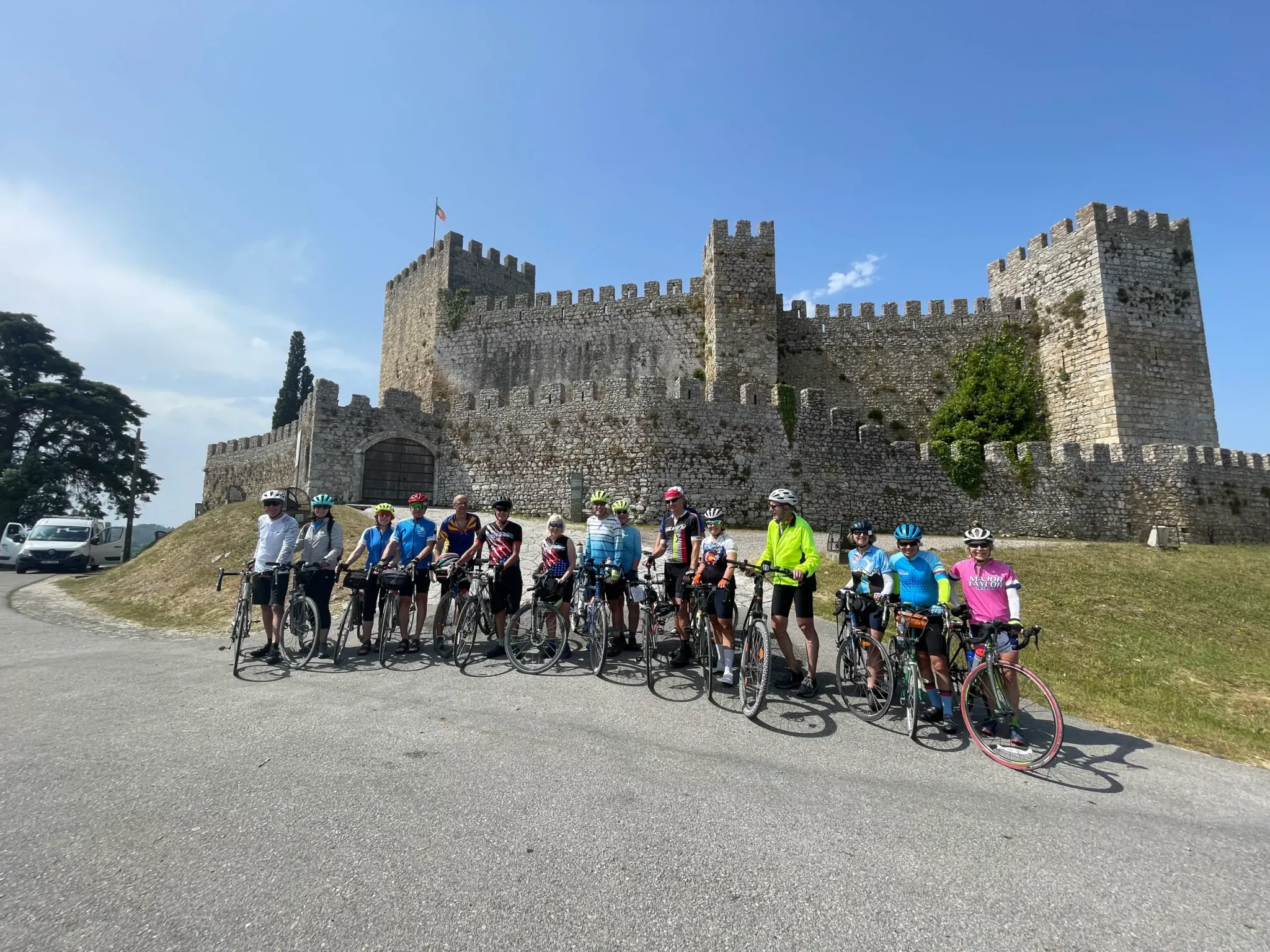
Tour of the Baltics
July 31 -August 11, 2027
Days 1–4: Vilnius, Kėdainiai, Radviliškis (Day 4 rides to Žeimelis, then shuttles to Riga)
Three riding days through the farmland and small towns of central Lithuania, starting with a shuttle out of Vilnius and ending with the shuttle from Žeimelis into Latvia.
- Length
- 11 Days
- Difficulty
- Moderate
- Price
- $3,820 USD or $5,420 AUD
Where the Riding Is
Three EuroVelo routes cross Lithuania: EuroVelo 10, the Baltic Sea Cycle Route; EuroVelo 13, the Iron Curtain Trail; and EuroVelo 11, the East Europe Route, which counts Vilnius among its capitals. The first two share the coast. EuroVelo describes that stretch as running for over 100 km (60 miles) along the sea by way of Palanga, Klaipėda and Nida, with the sand dunes of the Curonian Spit, a UNESCO World Heritage site, as its highlight. EuroVelo also notes that Lithuania has no national EuroVelo coordination center at the moment.
Our tour does not ride the coast. If the Curonian Spit is the reason you want to cycle in Lithuania, this is not the trip for it, and we would rather say so here than have you find out from the map. What we ride instead is the interior. A shuttle takes the group from Vilnius to Taujėnai, about 70 km north of the city, to avoid the city traffic. From there the route heads west on quiet country roads to Kėdainiai, one of the country's oldest towns, and then north to Radviliškis, a railway junction about 30 km from the Hill of Crosses.
The last Lithuanian day ends at Žeimelis, where the van takes over again for the transfer into Riga.
When to Go
The Lithuanian Hydrometeorological Service publishes national averages for 1991 to 2020. The mean air temperature across Lithuania, day and night together, is 12.5°C (55°F) in May, 15.9°C (61°F) in June, 18.3°C (65°F) in July, 17.6°C (64°F) in August and 12.8°C (55°F) in September. July is the warmest month of the year.
It is also the wettest. The same record gives 84 mm of precipitation in July and 77 mm in August, against 53 mm in May and 60 mm in September, and 695 mm for the year. Summer here means warm riding with a real chance of a wet afternoon, so the rain jacket is not optional. These are national figures, not readings for one town. The current departure dates are on the tour page.
Roads, Rules and Cycle Paths
Lithuania's Road Traffic Rules ask a good deal of cyclists. The one to know before you arrive: when riding on the carriageway, a cyclist must either wear a bright-colored vest with reflective elements or have a white front light and a red rear light switched on. That applies in daylight. At night or in poor visibility it is both, lights and vest. Neither lights nor a vest is on the list of what comes with our rental bikes, so pack one or the other.
A fastened helmet is compulsory for riders and passengers under 18 and recommended for anyone older. The bicycle must have a working brake and a bell, a red reflector or red light at the back, and orange reflectors in the wheel spokes.
Where a cycle path, a shared pedestrian and cycle path or a cycle lane exists, you are required to use it; riding on the carriageway beside one is prohibited. Where there is none, you ride on a paved shoulder if there is one, and otherwise on the sidewalk or in single file in the far right traffic lane, as close to its right edge as you can. Traffic keeps to the right. For alcohol, the Law on Road Traffic Safety sets 0.4 per mille as the most that a person driving a vehicle may have, and it counts a bicycle as a vehicle, so keep the beer for the evening. Rules change, so check the current Road Traffic Rules before you travel. This is a summary, not legal advice.
What Riding Here With Us Looks Like
Day 1 is check-in at Vilnius, a bike fitting, time on your own in the city, and a welcome dinner with the first group meeting. Day 2 is 82 km (51 miles) from Taujėnai to Kėdainiai through open farmland. Day 3 is 89 km (55 miles) north to Radviliškis, with gentle hills and open fields. Day 4 is 85 km (53 miles) to Žeimelis on mostly flat terrain, followed by the shuttle to Riga.
The tour is graded moderate, and the Lithuanian days show why a flat country can still earn that grade: three days in a row of more than 80 km (50 miles). The tour as a whole asks you to be comfortable with 80 to 90 km days on flat and gently rolling terrain. Any bike you are used to will do; the tour description names road, touring and mountain bikes alike.
GPS files and cue sheets are part of the tour, along with the guide and ride leader, the support van with its snack stops, and luggage transport. If a day runs long, the van will take you the rest of the way.
Get to Know Lithuania
Where the riding is, when to go, and what you will eat and see on the way. These were written for our Baltics route, which rides through Lithuania.
- RoutesTop Scenic Routes on a Baltic Bike Tour: Highlights from Estonia, Latvia & Lithuania
- Best time to goBest Time to Bike Tour the Baltics: Weather, Seasons & Festivals
- Food & drinkLocal Food and Drink to Try on a Baltic Bike Tour
- CultureCultural Experiences and Festivals to Catch While Cycling the Baltics
Plan Your Lithuania Ride
What the trip costs and involves: where you stay, the bike, what to pack, the roads and the rules, and how fit you need to be. These were written for our Baltics route, which rides through Lithuania.
- ItineraryHow to Plan a Multi-Country Bike Tour Through the Baltics
- CostsCost of a Bike Tour in the Baltics: Budget Tips and Pricing Breakdown
- Where to stayAccommodation Guide for Cyclists Touring the Baltics: Hostels, Hotels & Guesthouses
- Bike rentalBike Rental and Support Services in the Baltics: What You Need to Know
- Packing listEssential Gear and Packing List for a Baltic Bike Tour
- SafetyCycling Safety and Road conditions in the Baltics: Tips for a Smooth Ride
Choose Your Tour and Book It
Once Lithuania is on your list, these are the pages that settle the rest: how a guided tour compares with going alone, what our price covers, how hard the riding is, and how to reserve a place.
What the price includes
Lodging, breakfasts, guides, van support and luggage transport, and where the list stops.
Difficulty levels
How we grade Easy, Moderate and Demanding, and how to tell which you are ready for.
Bike rentals
The bikes we rent, what comes fitted to them, and bringing your own instead.
How reservations work
Confirm there is space, complete one registration form per rider, then send your deposit.
Private departures
Any of our tours can run on other dates for your own group, with the itinerary tailored to it.
What riders say
Testimonials from riders who have been on tour with us.
Ready to ride Lithuania?
Register for a scheduled departure, or ask us about dates for your own group.

Stay Updated
Subscribe to be updated on our latest news.